Romanian government collapses after no-confidence vote – Reuters
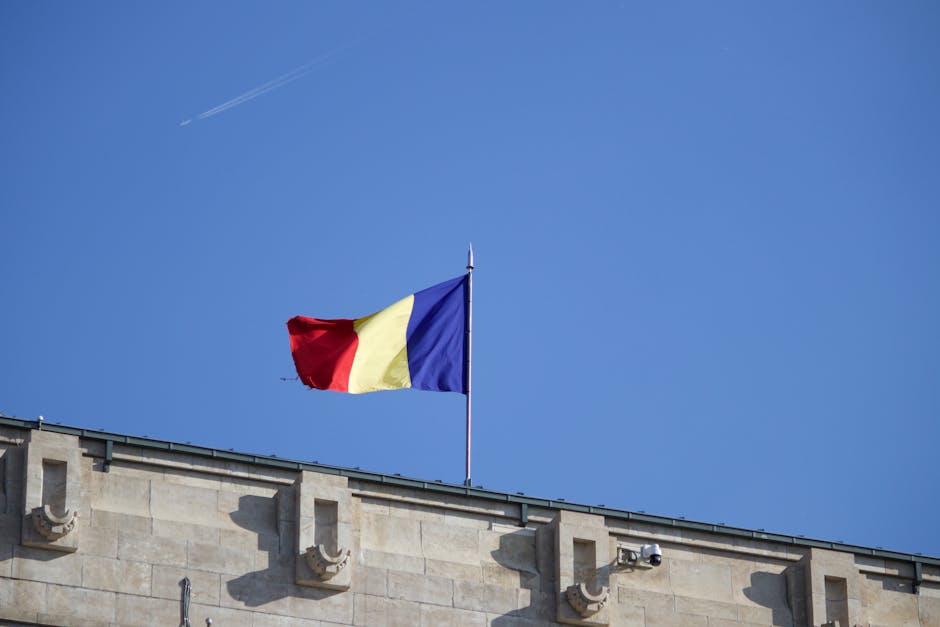
Romania's coalition government, led by Prime Minister Florin Cîțu of the National Liberal Party (PNL), collapsed on October 5, 2021, after losing a no-confidence vote in the bicameral Parliament in Bucharest. The motion, initiated by the opposition Social Democratic Party (PSD) and supported by former coalition partner USR PLUS, passed with a significant majority, plunging the country into a period of political uncertainty.
Background: A Fragile Coalition and Mounting Tensions
The fall of Florin Cîțu's government marked a culmination of escalating political tensions and internal disputes that had plagued the ruling coalition since its formation in December 2020. The government, comprised of the National Liberal Party (PNL), the reformist USR PLUS alliance, and the Democratic Alliance of Hungarians in Romania (UDMR), was initially hailed as a stable pro-European alternative to previous unstable administrations. Its mandate was to implement crucial reforms, modernize the economy, and ensure the efficient absorption of European Union recovery funds.
The 2020 General Elections and Coalition Formation
The general elections held on December 6, 2020, yielded a fragmented Parliament, making coalition building a complex endeavor. The Social Democratic Party (PSD) emerged as the largest single party, securing approximately 29% of the vote. However, its historical baggage and a lack of viable coalition partners prevented it from forming a government. The National Liberal Party (PNL), led at the time by Ludovic Orban, came in second with around 25%. The newly formed reformist alliance USR PLUS (Union Save Romania and Party of Liberty, Unity and Solidarity) garnered about 15%, while the Alliance for the Union of Romanians (AUR), a nationalist and eurosceptic party, surprisingly entered Parliament with nearly 9%. The Democratic Alliance of Hungarians in Romania (UDMR) secured its traditional 5-6% of the vote.
Following weeks of intense negotiations, a center-right coalition was forged between the PNL, USR PLUS, and UDMR. This alliance, though ideologically diverse, shared a common goal of pro-European governance and a commitment to reforms, particularly in the justice system and public administration. Florin Cîțu, then Minister of Finance in the outgoing PNL minority government, was nominated as Prime Minister by President Klaus Iohannis and subsequently approved by Parliament on December 23, 2020. The coalition agreement outlined a shared governance program focusing on economic recovery, justice reform, and improving public services. Key ministerial portfolios were distributed among the parties, with USR PLUS taking charge of crucial ministries such as Transport, Justice, Health, and European Funds.
Early Signs of Discord and Policy Disagreements
Despite the initial optimism, cracks in the coalition began to appear relatively early. Disagreements often stemmed from differing approaches to public policy, allocation of resources, and the pace of reforms. USR PLUS, positioning itself as a party committed to radical change and transparency, frequently clashed with the PNL, which was perceived by some as more pragmatic and inclined towards traditional political maneuvering.
One of the first significant points of contention arose over the national budget for 2021. USR PLUS advocated for stricter fiscal discipline and a more targeted allocation of funds, while the PNL, facing pressure from local administrations, sought more flexibility for public investments. Although a compromise was eventually reached, the negotiations highlighted the underlying tension regarding fiscal policy and spending priorities.
Another area of friction was healthcare. Vlad Voiculescu, the USR PLUS Minister of Health, became a lightning rod for criticism, particularly during the COVID-19 pandemic. His reformist agenda and attempts to bring transparency to the healthcare system, including data on intensive care unit (ICU) beds and vaccination campaigns, often put him at odds with other government factions and parts of the medical establishment. Public controversies surrounding COVID-19 death reporting and the management of pandemic restrictions further exacerbated these tensions.
Escalation: Dismissal of Health Minister and No-Confidence Threats
The political crisis escalated dramatically in April 2021 with the dismissal of Health Minister Vlad Voiculescu by Prime Minister Cîțu. The dismissal followed a series of public spats and an incident involving a ministerial order regarding COVID-19 quarantine rules, which Voiculescu's ministry issued without consulting the Prime Minister. USR PLUS condemned the dismissal as unilateral and a breach of the coalition agreement, arguing that such decisions should be made in consultation with all coalition partners.
The immediate aftermath saw USR PLUS threaten to withdraw its support for the government if Cîțu remained Prime Minister. While the crisis was temporarily averted through intense negotiations and a reaffirmation of the coalition agreement, the trust between PNL and USR PLUS was severely damaged. USR PLUS agreed to remain in the government, but its relationship with Prime Minister Cîțu remained strained, marked by a lack of direct communication and increasing public criticism.
The Anghel Saligny Program and the Final Rupture
The final catalyst for the government's collapse was the "Anghel Saligny" national investment program. This ambitious program, proposed by the PNL, aimed to allocate substantial funds (estimated at over 50 billion lei or approximately 10 billion euros) to local infrastructure projects across Romania. While the stated goal was to boost local development, USR PLUS viewed the program with deep suspicion, labeling it as a "clientele-based" initiative designed to channel funds to PNL-affiliated local administrations without sufficient transparency or merit-based allocation criteria.
USR PLUS argued that the program duplicated existing EU funding mechanisms, particularly those under the National Recovery and Resilience Plan (PNRR), and risked diverting resources from more strategic national priorities. They insisted on amendments to ensure transparency and prevent political patronage. Despite USR PLUS's objections and demands for detailed criteria, Prime Minister Cîțu pushed the program through a government ordinance in early September 2021, bypassing parliamentary debate and the input of USR PLUS ministers.
This unilateral action was the breaking point. On September 1, 2021, USR PLUS announced its decision to withdraw its ministers from the government, effectively ending the coalition. The party accused Prime Minister Cîțu of repeatedly acting against the spirit of the coalition agreement, undermining democratic procedures, and prioritizing partisan interests over national ones. The withdrawal of USR PLUS left the PNL and UDMR in a minority government, making its collapse a matter of time.
Key Developments: The Path to the No-Confidence Vote
With the USR PLUS ministers resigning, the Cîțu government became a minority administration, vulnerable to any opposition move. The political landscape quickly shifted as various parties began to strategize for a potential government collapse.
The Filing of No-Confidence Motions
Immediately after USR PLUS withdrew its support, both the Social Democratic Party (PSD) and USR PLUS announced their intention to file no-confidence motions against the Cîțu government. The PSD, as the largest opposition party, had a strong political incentive to capitalize on the internal strife of the ruling coalition. USR PLUS, having been part of the government, aimed to remove Florin Cîțu from the prime ministerial office, seeing him as the primary obstacle to future cooperation or a more stable administration.
Under the Romanian Constitution, a no-confidence motion can be initiated by at least one-quarter of the total number of deputies and senators. To pass, it requires the affirmative vote of a majority of the total number of deputies and senators (234 votes out of 466).
The PSD was the first to file its motion, titled "Stop poverty and price hikes. Down with the Cîțu government!" Their motion focused on the government's perceived failures in managing the economy, combating the pandemic, and addressing the rising cost of living. USR PLUS subsequently filed its own motion, specifically targeting Florin Cîțu and his management style, reiterating their concerns about transparency and governance.
Parliamentary Procedures and Delays
The process of debating and voting on no-confidence motions is governed by the Parliament's rules of procedure. However, the President of the Chamber of Deputies, Ludovic Orban (PNL), initially tried to delay the process, citing procedural irregularities and the need to consolidate the motions. This move was widely seen as an attempt by the PNL to buy time, potentially to negotiate new alliances or to pressure USR PLUS back into the fold.
The Constitutional Court of Romania (CCR) was asked to rule on the legality of consolidating the two motions. The CCR ruled that separate motions should be debated and voted upon individually, but it also stated that Parliament had the right to decide the order of their consideration. This ruling effectively cleared the path for the motions to be debated.
After further procedural wrangling, the Parliament's Standing Bureaus agreed to debate and vote on the PSD's no-confidence motion first, primarily because it had been filed earlier and had secured more signatures. The debate and vote were scheduled for October 5, 2021.
The No-Confidence Debate
The parliamentary debate on October 5 was charged with political rhetoric. Representatives from the PSD, USR PLUS, and AUR passionately argued for the removal of the Cîțu government.
The Social Democratic Party accused the government of economic mismanagement, citing rising inflation, increasing energy prices, and a growing public deficit. They criticized the government's handling of the COVID-19 pandemic, particularly the low vaccination rates and the strain on the healthcare system. Marcel Ciolacu, the PSD leader, emphasized the need for a stable government focused on the needs of ordinary Romanians rather than political infighting.
USR PLUS leaders, including Dan Barna and Dacian Cioloș, focused their criticism directly on Prime Minister Cîțu, accusing him of authoritarian tendencies, undermining democratic institutions, and prioritizing personal political ambitions over the country's stability. They reiterated their concerns about the "Anghel Saligny" program and the lack of transparency in governance. Their vote against the government was framed as a necessary step to restore integrity and trust in the political process.
The Alliance for the Union of Romanians (AUR) also supported the motion, using the opportunity to criticize the entire political establishment and advocate for their nationalist agenda. While their ideological positions differed significantly from PSD and USR PLUS, their shared objective of ousting the Cîțu government created a temporary alliance.
Prime Minister Florin Cîțu and PNL representatives defended their government's record, highlighting economic growth indicators, efforts to attract foreign investment, and the challenges posed by the pandemic. Cîțu accused USR PLUS of irresponsibility and of betraying their electoral mandate by bringing down a pro-European government. He warned against the instability that would follow and criticized the "unholy alliance" between PSD, USR PLUS, and AUR.
The Vote and Its Outcome
The vote on the no-confidence motion took place on October 5, 2021. The outcome was decisive. Out of the 466 members of Parliament (deputies and senators), 281 voted in favor of the motion, significantly exceeding the required threshold of 234 votes.
The breakdown of votes indicated that the motion passed with the combined support of the PSD, USR PLUS, and AUR, along with a few independent parliamentarians. The PNL and UDMR lawmakers abstained from the vote, as is customary for the targeted government, or voted against the motion, but their numbers were insufficient to prevent its passage.
Following the announcement of the result, Prime Minister Florin Cîțu immediately acknowledged the Parliament's decision. He stated that he respected the vote and would submit his resignation to President Klaus Iohannis. The collapse of the government marked the end of the PNL-USR PLUS-UDMR coalition after less than a year in power and ushered in a period of political uncertainty.
Impact: The Immediate Aftermath and Broader Consequences
The collapse of the Romanian government has immediate and far-reaching consequences, affecting the political landscape, economic stability, social programs, and Romania's international standing.
Political Vacuum and Caretaker Government
The most immediate impact is the creation of a political vacuum. Following the no-confidence vote, Prime Minister Florin Cîțu's cabinet became a caretaker government. Under the Romanian Constitution, a caretaker government has limited powers. It can only manage current affairs and cannot initiate new legislative projects, sign significant international agreements, or make major policy decisions. This limitation severely hampers the country's ability to respond effectively to ongoing crises and implement long-term strategies.
The caretaker status means that key reforms, including those related to the justice system, public administration, and state-owned enterprises, are effectively paused. Crucial decisions regarding the national budget for the upcoming year, investment projects, and the implementation of the National Recovery and Resilience Plan (PNRR) are delayed or put on hold until a new, fully empowered government is formed.
Economic Implications
The political instability has significant economic ramifications. Romania, already grappling with a high budget deficit, rising inflation, and the economic fallout from the COVID-19 pandemic, faces increased uncertainty.
Budget Deficit and Public Debt: The lack of a stable government makes it challenging to address the country's fiscal imbalances. Romania has committed to reducing its budget deficit to below 3% of GDP by 2024, a target that now appears more difficult to achieve. The inability to pass a new budget or implement fiscal reforms could lead to increased public debt and potential pressure from international financial institutions.
* Inflation and Energy Prices: Romania is experiencing a surge in inflation, driven by rising energy prices and supply chain disruptions. A caretaker government has limited tools to intervene effectively, leaving consumers and businesses vulnerable.
* Foreign Investment: Political instability typically deters foreign direct investment (FDI). Investors seek predictability and a stable policy environment. The prolonged period of uncertainty could lead to a slowdown in investment, impacting job creation and economic growth.
* EU Funds and the PNRR: The efficient absorption of European Union funds, particularly those from the National Recovery and Resilience Plan (PNRR), is crucial for Romania's post-pandemic recovery and modernization. The PNRR, worth approximately 29.2 billion euros in grants and loans, requires a stable government to implement the necessary reforms and investment projects. Delays in forming a new government could jeopardize the timely submission of payment requests and the overall implementation of the plan, risking the loss of vital funds.
Social Impact and Public Trust
The political crisis has a tangible impact on the daily lives of Romanian citizens.
COVID-19 Pandemic Response: At the time of the government collapse, Romania was facing one of the most severe waves of the COVID-19 pandemic, with high infection rates, overwhelmed hospitals, and a low vaccination rate compared to other EU countries. A caretaker government is ill-equipped to manage such a crisis, potentially leading to further delays in public health measures, vaccine campaigns, and support for the healthcare system.
* Public Services: The paralysis in government decision-making can affect the functioning of public services, from education to infrastructure projects. The uncertainty surrounding future policies can create apprehension among public sector employees and beneficiaries of social programs.
* Erosion of Public Trust: Frequent government changes and prolonged political crises erode public trust in democratic institutions and the political class. This can lead to increased cynicism, voter apathy, and potentially fuel support for populist or extremist parties, as evidenced by the rise of AUR in the 2020 elections. Public discontent, already high, could manifest in protests and social unrest.
Romania’s International Standing
The instability also affects Romania's image and standing on the international stage.
European Union: As an EU member state, Romania's political stability is important for the coherence and effectiveness of the Union. The inability to form a stable government can weaken Romania's voice in Brussels and hinder its ability to advocate for its interests within the EU framework. Concerns about the rule of law and democratic backsliding, which have occasionally surfaced in EU reports, could be exacerbated.
* NATO and Regional Security: Romania is a key NATO member state on the alliance's eastern flank, bordering Ukraine and the Black Sea. A stable government is essential for maintaining consistent foreign policy, defense commitments, and regional security cooperation. While fundamental foreign policy orientations are unlikely to change, prolonged instability can create a perception of weakness.
* Foreign Relations: The caretaker status limits the government's capacity to engage in high-level diplomatic initiatives or sign new bilateral agreements, potentially impacting Romania's relationships with key international partners.
What Next: The Constitutional Path to a New Government
Following the no-confidence vote, Romania entered a complex constitutional process to form a new government. This process involves the President, parliamentary consultations, and multiple rounds of nominations and votes, with the ultimate possibility of early elections.
Presidential Consultations
The first step in forming a new government rests with President Klaus Iohannis. According to Article 85 of the Romanian Constitution, the President designates a candidate for the office of Prime Minister after consulting with the parliamentary parties.
President Iohannis typically holds separate rounds of consultations with the leaders of all parliamentary groups. During these meetings, parties present their proposals for a new Prime Minister and outline their conditions for supporting a potential government coalition. The President plays a crucial role in mediating these discussions and identifying a candidate who has a reasonable chance of securing parliamentary approval.
First Nomination and Vote of Confidence
After consultations, President Iohannis designates a candidate for Prime Minister. This candidate then has a maximum of 10 days to seek a vote of confidence from Parliament. To do so, the designated Prime Minister must present a list of ministers and a government program to Parliament.
The Parliament, in a joint session of the Chamber of Deputies and the Senate, debates the program and the list of ministers. A vote of confidence is then held. To be invested, the proposed government needs the affirmative vote of a majority of the total number of deputies and senators (234 votes out of 466). If the government receives this majority, it is officially sworn in, and the political crisis is resolved.
Second Nomination and the Path to Early Elections
If the first designated Prime Minister fails to obtain the vote of confidence from Parliament, President Iohannis must initiate a second round of consultations and designate another candidate for Prime Minister. This second candidate also has 10 days to present a government program and ministerial list to Parliament and seek a vote of confidence.
The crucial constitutional provision comes into play if the second designated Prime Minister also fails to obtain parliamentary approval within 60 days of the first request for investiture. In such a scenario, the President has the power to dissolve Parliament and call for early general elections. This is a significant constitutional safeguard designed to break political deadlocks.
However, dissolving Parliament and calling early elections is a rare and complex step in Romania. It requires careful consideration, as it entails significant logistical challenges, financial costs, and the risk of further prolonging political instability. The last time early elections were seriously considered was in 2012, but they were ultimately avoided.
Potential Scenarios and Political Strategies
The political landscape after the no-confidence vote presents several complex scenarios:
Reformation of the Center-Right Coalition (PNL-USR PLUS-UDMR): This scenario would require significant concessions and a major shift in leadership, particularly from the PNL. USR PLUS has stated that it would not enter a government led by Florin Cîțu. Therefore, the PNL would likely need to propose a different prime ministerial candidate and agree to a revised coalition agreement addressing USR PLUS's concerns about transparency and governance. The UDMR, as a stable partner, is likely to support any viable pro-European coalition.
* A Grand Coalition (PNL-PSD): This is a historically unlikely but increasingly discussed option. The PNL and PSD are traditional political rivals, but the need for stability and the challenges of forming other majorities could push them towards an unexpected alliance. Such a coalition would command a strong majority in Parliament but would be ideologically diverse and potentially unpopular with their respective voter bases. Negotiations would be arduous, focusing on the prime ministerial role and key ministerial portfolios.
* Minority Government with External Support: A party or alliance could attempt to form a minority government, relying on the external support or abstention of other parties. For example, PNL and UDMR could try to form a government that relies on specific votes from PSD or USR PLUS on a case-by-case basis. This would be inherently unstable and prone to frequent crises.
* USR PLUS-PSD-AUR Alliance (Unlikely): While these three parties voted together to oust the Cîțu government, their ideological differences are vast, making a stable governing coalition between them highly improbable. USR PLUS is a pro-European reformist party, while AUR is nationalist and eurosceptic, and PSD is a traditional social democratic party.
* Early Elections: If all attempts to form a stable government fail, early elections become the constitutional imperative. While some parties, particularly those hoping to improve their electoral standing, might advocate for this, many others would prefer to avoid it due to the costs, logistical challenges, and the risk of further fragmentation in Parliament.
Key Political Actors and Their Stances
President Klaus Iohannis: As the arbiter of the process, Iohannis's role is critical. He has consistently favored a stable, pro-European government. His preferred outcome is likely a PNL-led government, potentially with a new PNL prime minister, or a renewed PNL-USR PLUS-UDMR coalition.
* National Liberal Party (PNL): The PNL aims to remain in power and lead the next government. They face the challenge of finding a new prime ministerial candidate acceptable to potential partners and navigating internal divisions, especially regarding Florin Cîțu's future role within the party.
* Social Democratic Party (PSD): As the largest party in Parliament, the PSD is keen to return to government. They will seek to leverage their numerical strength in any negotiation, potentially pushing for a PSD prime minister or significant ministerial control.
* USR PLUS: Having triggered the crisis, USR PLUS aims to ensure a government committed to genuine reforms and transparency, without Florin Cîțu as Prime Minister. They are likely to be demanding in any coalition negotiations, insisting on specific policy commitments and ministerial portfolios.
* Democratic Alliance of Hungarians in Romania (UDMR): The UDMR typically acts as a pragmatic coalition partner, seeking stability and representation for the Hungarian minority. They are likely to join any viable pro-European majority.
* Alliance for the Union of Romanians (AUR): AUR's role is primarily that of an opposition force. While they can contribute to blocking governments, their extreme views make them an unlikely coalition partner for mainstream parties.
The period following the no-confidence vote is a test of Romania's political maturity and its ability to forge consensus in a fragmented Parliament. The stakes are high, with the country's economic stability, public health, and international standing hanging in the balance as leaders navigate the complex path towards a new government.